

Most billboard campaigns are built around a single message that runs for four to eight weeks. That model works well for brand awareness, but it does not serve every campaign goal. Some promotions have a hard deadline. Some offers are tied to a specific day, weather condition, or audience window. For those situations, a digital billboard gives you something a static face cannot: the ability to change your message without changing your placement.
That flexibility is the core advantage of digital out-of-home advertising, and most brands do not use it as strategically as they could.
What Makes a Digital Billboard Different From Static
A static billboard locks in one message for the full rental period. Once the vinyl goes up, the creative stays until the campaign ends. Digital out-of-home advertising operates on a rotation loop, cycling your creative alongside other advertisers on the same screen. That share-of-voice model comes at a higher base rate than static, but it removes the production cost and lead time that static requires every time a message changes.
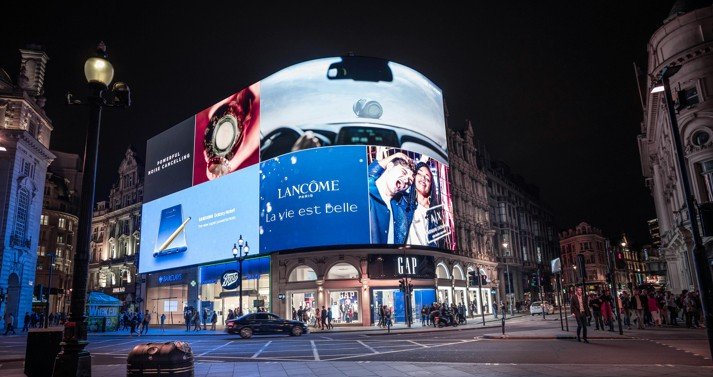
For time-sensitive promotions, that difference is significant. A retail brand running a weekend sale does not need to commit to four weeks of the same offer. A healthcare brand promoting open enrollment can update its message as the deadline approaches. A restaurant launching a seasonal item can swap creative the day it hits the menu. The placement stays the same. Only the message changes.
How Dayparting Turns One Billboard Into Multiple Campaigns
Dayparting lets you schedule different creatives at different times of day on the same display. A single digital billboard can run a morning commuter message at 7 a.m. and a completely different offer during the afternoon drive home.
A financial services firm might run a brand awareness ad in the morning and a direct response offer in the early evening when decision-makers are heading home. A fitness brand could promote a morning class schedule at dawn and a weekend membership offer on Friday afternoons.
Dayparting does not require a larger budget. It requires a clear understanding of when your audience is on the road and what message fits that moment.
The Right Promotions for a Digital Billboard Campaign
Not every time-sensitive promotion is a natural fit for outdoor advertising. The format still requires simplicity. A digital billboard has roughly three to five seconds of viewing time, which means the message needs to land instantly regardless of how often it changes.
Promotions that work well on digital billboards share a few common traits:
- A clear deadline — Limited-time offers, seasonal campaigns, and event promotions give the audience a reason to act within a defined window.
- A single call to action — One instruction is all the format supports. A phone number, a URL, or a location works. A feature list does not.
- A message that reads in seconds — If the offer requires explanation, it belongs in a different channel. The billboard's job is to create enough interest for the next step.
Event-driven promotions, grand openings, flash sales, and enrollment periods are among the strongest use cases. So are campaigns tied to local sports seasons, holidays, or community moments where timing is part of the message.
Pairing Digital Billboards With Your Broader Campaign
A digital billboard works best when it connects to the rest of your marketing. When someone sees your offer on the road and later encounters the same message on social media or in a search result, the two touchpoints reinforce each other. That sequence shortens the path from awareness to action because repeated exposure and recall build the baseline of familiarity that moves a buyer closer to a decision.
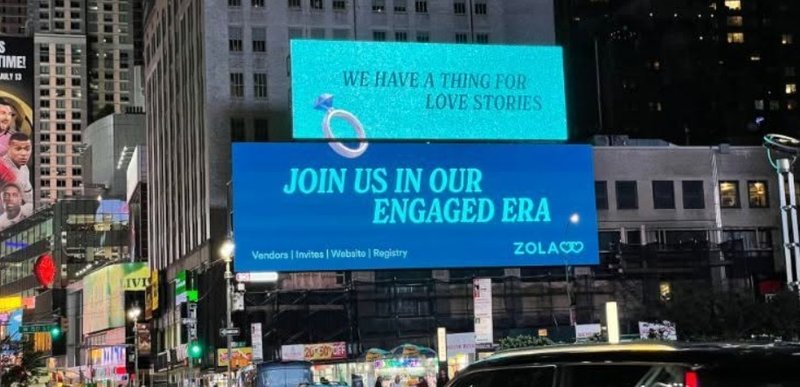
For this to work, the billboard message and the digital message need to align. Same offer, same visual tone, same call to action. A buyer who sees one look on a billboard and a different look online will not connect the two. Consistency is what turns a time-sensitive promotion into a full-funnel campaign rather than a standalone spend.
Pairing outdoor advertising with geofenced mobile campaigns adds another layer. When a driver passes your billboard and receives a mobile ad for the same offer within hours, recall goes up, and the promotion gains momentum across two channels on the same day.
Choosing the Right Location for a Time-Sensitive Promotion
Creative flexibility only produces results if the placement reaches the right audience. For time-sensitive promotions, location strategy matters as much as message strategy. A promotion tied to a specific neighborhood, retail corridor, or business district needs a billboard that sits within or near that area, not just a high-traffic highway face with broad reach.
Billboard visibility factors like approach speed, sightline distance, and dwell time all affect how well a time-sensitive message lands. A slower arterial road near a retail center can outperform a faster highway for a promotion that needs the audience to process a specific offer and act on it quickly.
Understanding popular billboard locations in your target market helps narrow the options before you commit to a placement.
How Full Inventory Access Supports Smarter Digital Campaigns
The best digital billboard placement for a time-sensitive promotion may not sit with the vendor you contact first. In most markets, digital inventory is split across multiple operators, and a single-source buyer only sees part of what is available. That gap can mean missing the placement closest to your target audience or settling for a less visible face because a better one was never on the table.
Working with a partner that has access to every billboard in every U.S. market gives you a complete view of available digital inventory before you commit. You can compare rotation schedules, dayparting options, and pricing across operators and choose the placement that fits both your message and your timeline.
The right digital billboard placement does not just support a promotion; it becomes part of what makes it work. Contact Billboard Connection to start building a campaign around placements that fit your timeline and your audience.