

Digital billboard advertising gives mid-sized and enterprise brands a rare mix of scale and control. You can reach commuters, shoppers, and decision-makers in the real world while still using modern levers like schedule shaping, message rotation, and multi-market coordination. The result is a channel that can drive awareness and support demand capture, as long as the campaign is designed for outcomes instead of impressions alone.
ROI comes from discipline. That means setting measurable targets, choosing the right screens for the right audience flow, building creatives that read in seconds, and optimizing through structured testing. The sections below outline a practical playbook your team can apply without overcomplicating the process.
Set ROI Goals and Measurement Plan Before You Buy
Start with a business objective that can be defended internally. “Awareness” is valid, yet it still needs proof. Define one primary KPI, then add two supporting signals that confirm direction.
Common primary indicators include lift in branded search, growth in direct site visits from the target region, higher conversion rates in paid search after launch, or improved inbound quality reported by sales. Supporting metrics might include QR scans from a dedicated destination page, call volume to a tracked number, or increases in form fills tied to geo-targeted landing pages.
Next, decide what success looks like at the flight level. A single week rarely tells the story, because outdoor influence builds through repeated exposure. Set checkpoints that fit reality, such as a two-week early read for directional lift, then a four-week review for trend stability. This creates a timeline that stakeholders can trust.
Finally, confirm measurement logistics early. Use a short URL that only appears on the billboards, a location-specific page, or a unique phone line. Those structures reduce guesswork and help separate OOH influence from other media activity.
Choose Screens and Schedules That Match Real Audience Movement
Digital screens vary widely in value, even within the same city. The right choice depends on who you need to reach and where they actually travel.
Begin with movement patterns. Identify priority corridors, business districts, retail centers, and commuter connectors tied to your buyer profile. Then evaluate directionality. A placement can sit on the perfect road and still miss if it faces the wrong flow during peak hours.
After location selection, focus on schedule design. Digital inventory usually runs in a loop shared with other advertisers, so your plan must account for frequency and timing. Instead of treating exposure as uniform throughout the day, align your presence with when your audience is most likely to be in the area. Morning commute can support professional services, mid-day can fit B2B errands and meetings, and evening can reinforce retail, dining, or recruiting.
One more factor affects ROI more than many teams expect: access. If you only see inventory from a limited set of owners, your shortlist can exclude the best screens for your specific corridors. Full-market visibility increases choice, and choice improves both effectiveness and pricing discipline.
Build a Creative That Wins in a Shared Rotation
Digital outdoor is fast. Drivers and passengers do not study a message, they glimpse it. Creative must be engineered for instant comprehension.
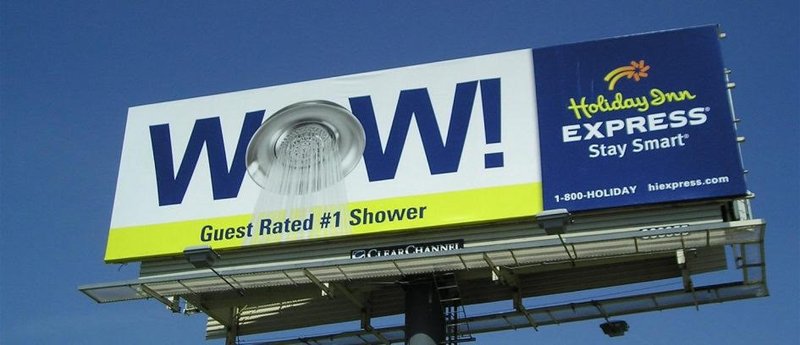
Use one clear idea per execution. Keep the headline short, make the offer obvious, and reduce supporting text to what is essential. Strong hierarchy matters more than clever copy. A viewer should know what you do and who you are within a moment.
Design for distance and contrast. Colors that look great on a laptop can lose clarity outdoors due to sunlight, weather, and surrounding signage. Simple shapes and high legibility usually outperform detailed layouts.
Also, connect creative to measurement. If the goal is demand capture, include a clean next step such as a short URL, a QR code with a dedicated landing page, or a memorable domain path. If the mission is awareness, prioritize brand identifiers, consistent visual assets, and a message that supports recognition across other channels.
Optimize Performance With Structured Testing and Channel Alignment
Optimization is where ROI becomes real. The key is to test deliberately instead of changing everything at once.
Start with a baseline creative set, then test one variable per cycle. Swap a headline while keeping layout stable, or adjust the offer while keeping the brand system consistent. This gives you a clear read on what influenced the response.
Use scheduling adjustments as a second lever. If inbound quality is strong during certain hours, shift more weight into those windows. If you see traffic spikes tied to local routines, such as weekend retail surges or weekday commute peaks, align time blocks to those patterns.
Then integrate with other media. Outdoor often improves performance in search and social because familiarity reduces friction. Coordinate messaging so your paid search copy, landing page language, and OOH creative feel connected. Retargeting can also convert interest created by real-world exposure, especially when the destination page matches the billboard promise.
Put a Full-Market Digital Strategy in Place With the Right Buying Partner
High-performing digital campaigns require two things that many advertisers struggle to secure on their own: hyperlocal planning and complete inventory access in the exact areas that matter. When a team is limited to a partial catalog, they may miss premium screens in key towns, corridors, or sub-markets, even with a strong budget and strong creative.
Billboard Connection helps medium and large organizations simplify this process. Their localized expertise supports metro and town-level targeting, and their ability to provide access to every billboard in every U.S. market helps remove the most common constraint in OOH buying: not seeing all available options where you want to advertise.
If you want a clearer path to ROI, send an inquiry to map priority areas, compare digital inventory across the full market, and build a flight designed for measurable outcomes.