

A movie's opening weekend lives or dies on awareness. Audiences do not discover a film the way they discover a product through a search query or a social feed recommendation. They encounter it repeatedly, in multiple contexts, until the title feels familiar enough to act on. OOH for the entertainment industry is one of the most powerful tools brands have for building that kind of mass awareness before a single ticket gets sold.
That is why Hollywood has never stopped using billboards. The format delivers something digital channels struggle to replicate: unavoidable, large-scale presence in the physical world where audiences actually live and move.
Why OOH for the Entertainment Industry Works Differently
Entertainment marketing has a unique challenge. The product does not exist yet when the campaign begins. A film, a streaming premiere, or a live event has to generate anticipation for something the audience has not experienced. That means the campaign has to do two things at once: build name recognition and create emotional interest, often with nothing more than a title, an image, and a release date.
Out of home (OOH) for the entertainment industry is built for exactly that task. Bold visuals and minimal text can carry enough weight to make an unfamiliar title feel unmissable. The format rewards simplicity, and entertainment creatives tend to be among the strongest in the OOH space because studios understand the value of a single, arresting image. The billboard gallery shows how that kind of creative translates across real placements.
How Billboards Build Anticipation Before a Release
The most effective OOH entertainment campaigns follow a phased approach. Early placements establish the title and the visual identity. Mid-campaign placements add context like a tagline, a cast name, or a release date. Final placements close in on the opening window with urgency messaging that moves the audience from awareness to action.
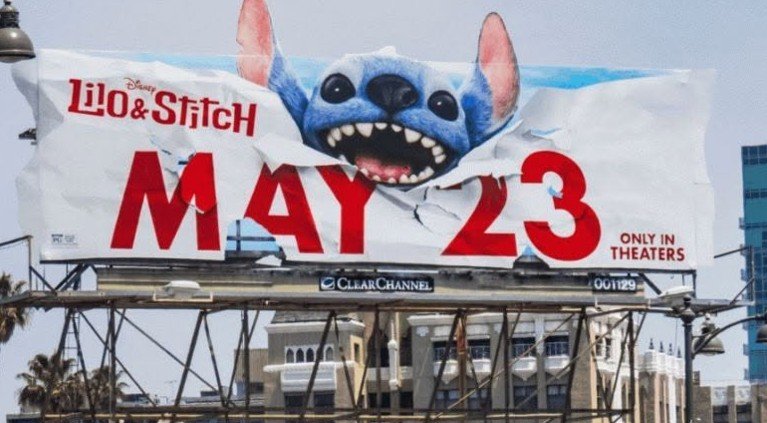
That progression works because billboards build through frequency. An audience that sees the same title on their commute for four weeks carries a different level of familiarity into opening weekend than one that saw a single digital ad the night before. Ad frequency is one of the most underused advantages in entertainment marketing, and the brands that plan around it consistently outperform those that treat OOH as a single-placement tactic.
The Role of Location in OOH for Entertainment Industry Campaigns
Not every billboard market matters equally for an entertainment campaign. The goal is not just to reach. It is reaching the right audience in the right context. For a wide theatrical release, that means high-traffic urban corridors, commuter highways, and entertainment districts where the target audience concentrates.
For a streaming premiere targeting a specific demographic, location strategy gets more precise. A campaign aimed at young adult audiences in Atlanta might prioritize corridors near universities, entertainment districts, and high-density residential areas rather than suburban commuter routes. A luxury brand partnership might favor affluent corridors where the audience aligns with the campaign positioning. The corridor matters as much as the market. A billboard on a fast-moving highway delivers a different kind of impression than one near a venue or a high-foot-traffic urban block.
OOH and Digital Working Together for Entertainment Campaigns
Out-of-home advertising works best as the foundation that makes every other channel more effective. When an audience has seen a title on a billboard for weeks, the trailer they encounter on social media lands differently. The display ad they see on a streaming platform feels familiar rather than intrusive. The search result they click carries more intent because the awareness was already built.
That carry-over effect is why entertainment marketers who combine OOH with broader campaign strategies consistently see stronger overall performance. The billboard does not need to close the sale. It needs to make the audience ready for the channels that will. Working with an agency that understands OOH for the entertainment industry and how it connects to the rest of a campaign makes that integration far more effective.
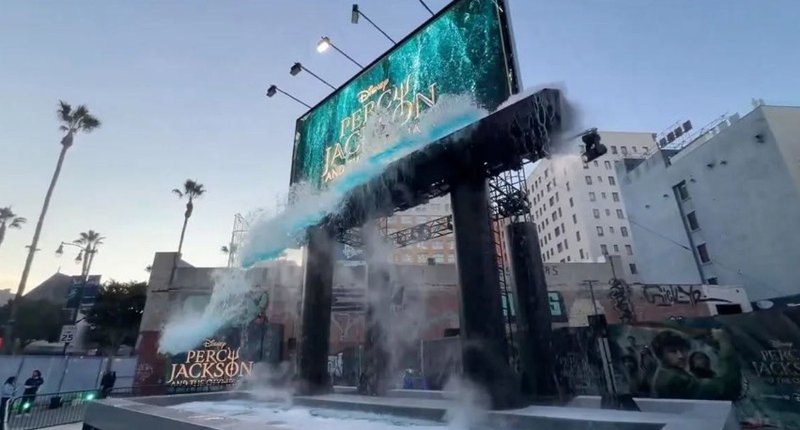
Multi-Market OOH Strategy for Wide Releases
A national theatrical release cannot rely on a single market. Wide releases need coordinated OOH campaigns across multiple cities, timed to the release schedule and scaled to the audience size in each market. A strong multi-market plan uses a mix of formats to build awareness at every level:
- Large bulletins on major highways — Build mass awareness across broad commuter audiences in each target market, putting the title in front of the highest volume of potential viewers early in the campaign window.
- Posters and transit panels in urban neighborhoods — Add frequency in high-density areas where the core audience lives, works, and moves throughout the day, reinforcing the title through repeated exposure in proximity.
- Digital displays near theaters and entertainment districts — Carry time-sensitive messaging as the release date approaches, reaching audiences who are already in entertainment mode and closest to the point of purchase.
Each format plays a different role. The strongest campaigns use all three in coordination rather than relying on a single placement type to carry the full load.
Why Full Inventory Access Matters for OOH for the Entertainment Industry
The best placement for an entertainment campaign may not sit with the vendor, a studio, or agency contacts first. In most markets, the billboards closest to entertainment districts, transit hubs, and high-density audience corridors are split across multiple operators. A single-source buyer misses options that a full-market view would surface immediately.
Working with a partner that has access to every billboard in every U.S. market means an entertainment campaign can be planned around the placements that actually reach the target audience, not just the inventory one seller chooses to show. Reach out to Billboard Connection to start building an OOH strategy for your next entertainment campaign.